18 02 2023 at 11:44
Think Again: The Power of Knowing What You Don't Know
Adam Grant was born in the township of West Bloomfield, Michigan, on August 13, 1981, to a lawyer father and a teacher mother.
He received his bachelor's degree in psychology from Harvard University in 2003 and his Ph.D. in organizational psychology from the University of Michigan in 2006.
He has received numerous awards for his research and teaching, including the American Psychological Association's Award for Distinguished Scientific Contributions to Work Psychology. In addition to his academic work, Grant is a popular speaker and writer, and his writing has appeared in publications such as The New York Times, The Wall Street Journal, and The Harvard Business Review. He has also been featured on television and radio programs, including NPR's "Fresh Air" and the BBC's "HARDtalk."
Adam Grant is an organizational psychologist, author, and professor. He is the author of several books, including "Give and Take," "Originals," and "Option B." Adam Grant explores the science of motivation, generosity, original thinking, and rethinking. He is nudging management to empower employees for exploration of their full potential.
Grant is a tenured professor at the Wharton School of the University of Pennsylvania, where he has taught since 2009. He is also the host of the TED podcast "WorkLife with Adam Grant." Grant is known for his research on topics such as leadership, workplace dynamics, and the role of generosity and giving in organizations.
https://en.wikipedia.org/wiki/Adam_Grant
https://adamgrant.net/about/biography/
Summary
"Think Again: The Power of Knowing What You Don't Know" is a book written by Adam Grant that was published in 2020. In the book, Grant explores the value of intellectual humility and the importance of being open to new ideas and perspectives. He argues that the ability to "think again" and revise our beliefs and assumptions is crucial for personal and professional success, and he provides practical advice for how to develop this skill. The book covers a wide range of topics, including decision-making, creativity, leadership, and the role of curiosity in learning and growth.
"Think Again: The Power of Knowing What You Don't Know" is a book that aims to help readers develop the skill of intellectual humility, which Grant defines as the ability to recognize and acknowledge what we don't know, and to be open to the possibility that our beliefs and assumptions may be wrong. Throughout the book, Grant discusses the importance of questioning our own beliefs and being open to new ideas and perspectives, and he offers practical advice for how to develop this skill.
Some of the topics covered in the book include:
- The role of intellectual humility in decision-making, creativity, and leadership
- The benefits of being open to new ideas and perspectives
- The dangers of overconfidence and the importance of being open to doubt
- The value of curiosity and the importance of asking questions
- Strategies for cultivating intellectual humility and for being open to change
Overall, "Think Again" is a thought-provoking and practical guide to developing the skill of intellectual humility, and it is full of ideas and strategies for how to be more open to new ideas and perspectives.
There are many ways that you can apply the principles of intellectual humility in your daily life. Here are a few ideas:
- Intellectual humility is the ability to recognize and acknowledge what we don't know, and to be open to the possibility that our beliefs and assumptions may be wrong. It is a crucial skill for personal and professional success.
- Being open to new ideas and perspectives can lead to better decision-making, more creativity, and more effective leadership.
- Overconfidence and a lack of intellectual humility can be dangerous, leading to poor decisions, a lack of innovation, and a failure to adapt to changing circumstances.
- Curiosity is an important tool for cultivating intellectual humility, as it helps us to ask questions and to seek out new information and perspectives.
- There are practical strategies that we can use to develop our intellectual humility, such as seeking out diverse viewpoints, asking questions, and being open to change.
- Seek out diverse viewpoints: Make an effort to expose yourself to different perspectives and ideas, particularly those that differ from your own. This can help you to see things in a new light and to challenge your own assumptions.
- Ask questions: Don't be afraid to ask for clarification or to seek out more information when you don't fully understand something. This can help you to better understand the world around you and to avoid making assumptions based on incomplete information.
- Be open to change: Recognize that your beliefs and assumptions are not set in stone, and be open to the possibility that you may need to change your mind as you learn more.
- Practice self-reflection: Take time to reflect on your own beliefs and assumptions, and be willing to challenge them when necessary. This can help you to develop a more nuanced understanding of the world and to avoid being overly confident in your own viewpoints.
By adopting these habits, you can develop your own intellectual humility and be more open to new ideas and perspectives. This can lead to better decision-making, more creativity, and more effective leadership in your personal and professional life. “The purpose of learning isn’t to affirm our beliefs; it’s to evolve our beliefs.”
How do you manage to show this humility without compromising the confidence people put in you?
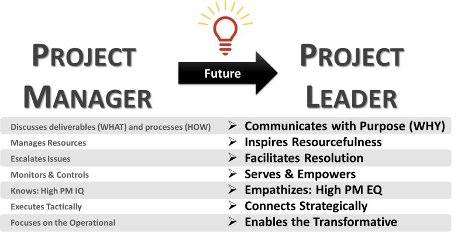
Project managers can use intellectual humility in their work. Intellectual humility is the recognition that one's own understanding and perspective may be limited or incomplete, and the willingness to consider other viewpoints and revise one's own understanding in light of new information or evidence.
This trait can be particularly valuable for project managers, as it can help them to be open to new ideas and approaches, to listen to and consider the perspectives of team members and stakeholders, and to adapt their plans and strategies as needed. By cultivating intellectual humility, project managers may be better able to effectively lead and manage their teams, and to successfully navigate the challenges and complexities of their projects.
Intellectual humility can be a valuable trait for project managers in a number of ways. For example:
1. It can help project managers to be more open to new ideas and approaches, which can lead to more innovative and effective solutions to problems.
2. It can help project managers to be more receptive to feedback and criticism, which can improve their performance and the quality of their work.
3. It can help project managers to be more collaborative and to build stronger relationships with team members and stakeholders, as they are more willing to listen and consider other perspectives.
4. It can help project managers to be more adaptable and flexible, as they are open to revising their plans and strategies in light of new information or challenges.
Overall, intellectual humility can enable project managers to be more effective leaders and to better navigate the complex and dynamic environment in which they work.
What can also be valuable is when you get into the negotiation skills of the project manager.
Qualities of expert negotiators
Good negotiators aren’t hard-nosed people who get the most out of every situation with force. In fact, good negotiation often involves humility, understanding, and patience. Good negotiators use a few common tactics that we can all adopt to be more persuasive.
- Looking for common ground. The person on the other side of the negotiation is not an enemy.
- Presenting fewer reasons. When we share a long list of reasons defending our argument to someone else, it’s easier for them to find flaws with our weakest points and to use that as grounds for dismissing our entire case. Pick fewer reasons to support our case that are the strongest.
- Expressing curiosity. Instead of constantly going on offense or defense, good negotiators are curious. They ask questions like, “So you don’t see any merit in this proposal?”
- Asking more questions. Questions allow you to learn more about other party in a less adversarial manner.
Few lessons from the book:
1. It's important to be open to new ideas and perspectives, and to consider multiple viewpoints when making decisions.
2. It's necessary to be willing to question your own assumptions and beliefs, and to be intellectually humble in the face of new information.
3. To be effective in changing your mind, it's important to have a growth mindset and be willing to learn and grow.
4. It's important to approach problems with a curious and open-minded attitude, and to seek out diverse perspectives and challenge your own biases.
5. To be effective in changing your mind, it's important to be willing to take action and to experiment with different approaches.
Crucial takeaways
Fallacies & Biases
- First-instinct fallacy: The inclination to accept initial thoughts, opinions or responses as more accurate than subsequent ones.
- Desirability bias: The bias towards seeing what we desire to see.
- Confirmation bias: The habit of looking for information that supports our pre-existing views
- Overview effect: The transformative impact of experiences like seeing Earth from space or traveling, which broaden our understanding of the interconnectedness of everything on our planet.
- Binary bias: Our tendency to oversimplify complex ideas and situations into two distinct categories.
Four mindsets
When we think, talk, and interact with others, we often fall into one of four mindsets.
- Preacher: When our values or beliefs are at stake. We give sermons to defend our ideas.
- Prosecutor: When seeing flaws in other people’s thinking. We use arguments to prove them wrong & win.
- Politician: When we want to win people over. We focus on winning approval at the expense of all else.
- Scientist: When we accept how little we know. We form hypotheses, run experiments, and consistently rethink our understanding of the world and others based on new knowledge.
xxx
Conclusion
Organizations may benefit from the lessons presented in Think Again, as the book covers a range of topics related to decision-making, problem-solving, and personal and professional growth. Some potential ways in which organizations may benefit from the book's lessons include:
Improved decision-making: By fostering a culture of intellectual humility and open-mindedness, organizations may be better able to make more informed and effective decisions.
Enhanced problem-solving: By encouraging employees to challenge their own assumptions and biases, and to consider diverse perspectives, organizations may be better able to identify and solve problems.
Increased innovation: By fostering a growth mindset and encouraging employees to embrace learning and experimentation, organizations may be more able to generate new ideas and approaches.
Stronger team dynamics: By fostering a culture of collaboration and open communication, organizations may be able to build stronger and more effective teams.
Overall, the lessons from Think Again may help organizations to be more adaptable, innovative, and effective in achieving their goals.