
29 07 2025 at 09:00
Genba in the Arctic
In this article, I share some perspectives from my holiday of a lifetime – an expedition to the Arctic.
Given the sensitivity of the nature in the Arctic, and flying being the only realistic travel option, I was in two minds about whether I should consider such an expedition. Some initial research highlighted organisations through which the travel could be responsibly organised. Flying anywhere causes CO₂ emissions, and I remembered from my own pilot training (that’s another story) that planes fly more efficiently in cold air than warm.
Over the last 14 years, I have had the privilege of leading a number of significant European programs for a global automotive company headquartered in Japan. One of my many learnings has been the power of the Japanese concept genba. Literally translated, it means “go to the place”; in business, it translates into understanding a situation for yourself – especially if there's a challenging problem that needs strong countermeasures. I know from experience that a proposal to senior Japanese management should be accompanied by genba – as that's often the first question at the end of a presentation!
Genba was my personal motivation for going to the Arctic – to see the situation for myself, to draw my own conclusions about what has been happening there, and what countermeasures I could support. Additionally, I got to visit the most stunningly beautiful place I have ever seen (and likely will ever see).
The Expedition
The expedition took the form of a six-day cruise on board Ortelius – a Dutch-registered former scientific research vessel capable of sailing through ice (but not used to break sea ice).
The cruise set out from Longyearbyen on Svalbard, the most northerly town on the planet, and visited various fjords around Svalbard as well as the ice floe north of Svalbard.
There were many opportunities to get close to the local flora and fauna – using the onboard zodiacs to minimise the impact of our visit.
We had the privilege to see many incredible species including blue, minke and beluga whales, walruses, sea lions, reindeer, many species of migrating birds, and of course polar bears.
The Region
There is no land at the North Pole itself, but it is currently covered in sea ice to a greater or lesser extent throughout the year.
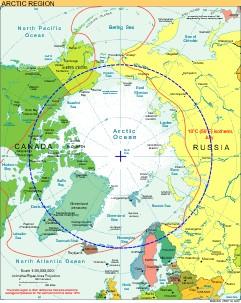
A map of the northern polar region immediately highlights some geopolitical challenges, as the Arctic is flanked by (in clockwise order from the zero meridian): Iceland, Greenland (Denmark), Canada, USA, Russia and Norway.
Svalbard is the most northerly point in Norway, managed as a devolved, locally administered area within the Kingdom of Norway. It has a population of around 2,600 people from over 50 nationalities and welcomes visitors from all countries.
Local Perspectives
Before starting the expedition, we spent a day in Longyearbyen. It was a great opportunity to see a little of this fascinating community, speak with residents and buy some local products.
The welcome was warm and expeditions on our scale (around 75 passengers) were clearly welcomed. However, larger cruises – some having more passengers than the entire local population – have been less welcomed, and indeed regulation has recently changed to limit the maximum vessel size to 200 passengers to limit negative impact.
In a local café (where we were welcomed by tame huskies!) I bought a book by a local author, Line Nagell Ylvisåker, which told her touching story and coupled it with a strong understanding of climate science to explain the dramatic impact that climate change was having on Svalbard.
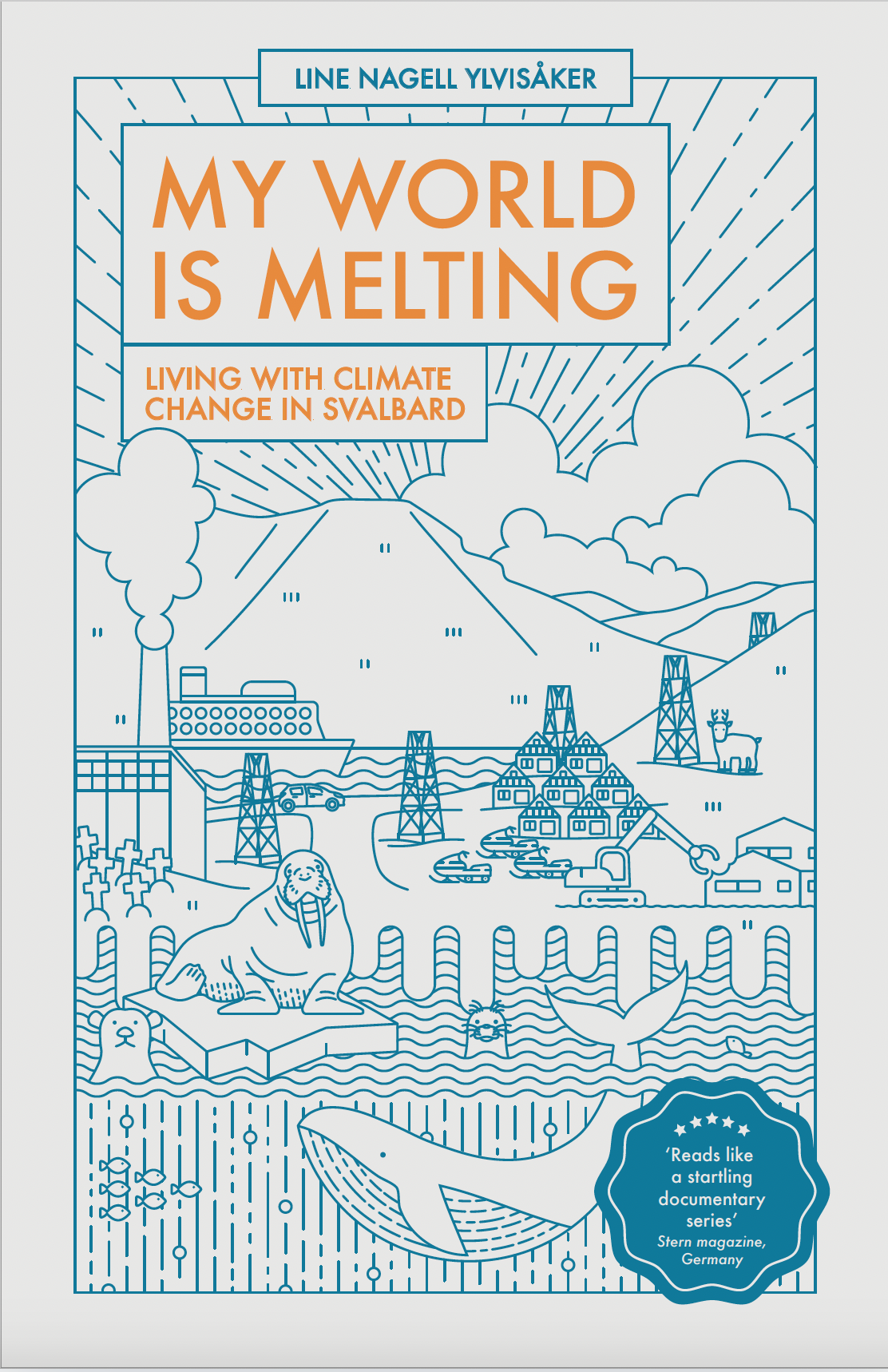
The climate around Svalbard is changing around four times faster than the global rate of change. The area was historically very dry (low precipitation); however, climate change has brought significant increases in precipitation which led to an avalanche in 2015 and the tragic loss of life in the community. Fjords once crossable in winter by snowmobile are no longer freezing, hence reducing accessibility to remote areas. I feel a responsibility to pass on Line's words: “Nature speaks in a language that refuses to be ignored.”
Human Presence
Svalbard was first discovered by William Barentsz in 1596 while searching for the North Sea Route. The first human settlers date back to the 17th century; human interest began to focus on exploiting the local resources through whaling, hunting and mining.
Whilst whale meat is still available in local restaurants (I think largely as a novelty for inquisitive visitors), there was no evidence of any scale of current whaling. As a vegetarian, I stayed well clear!
Mining on Svalbard is a consequence of the history of tectonic plate movement. It seems incredible, but the land mass was once located near to the Earth's equator where ancient forests were assimilated into layers of carbon, forming coal.
There remain some mining facilities on Svalbard, but nothing on the scale of past production. I was pleased to see Svalbard re-inventing itself as a centre for climate science, as well as responsible eco-tourism.
Climate Fresk
Having attended and facilitated many Climate Fresk workshops (including for PMI members), I felt the significance of many of the concepts used in the workshops being laid out before us during the expedition.
Melting Sea Ice
It was very special to be able to travel into the sea ice and to see polar bears in their favoured habitat for hunting seal.
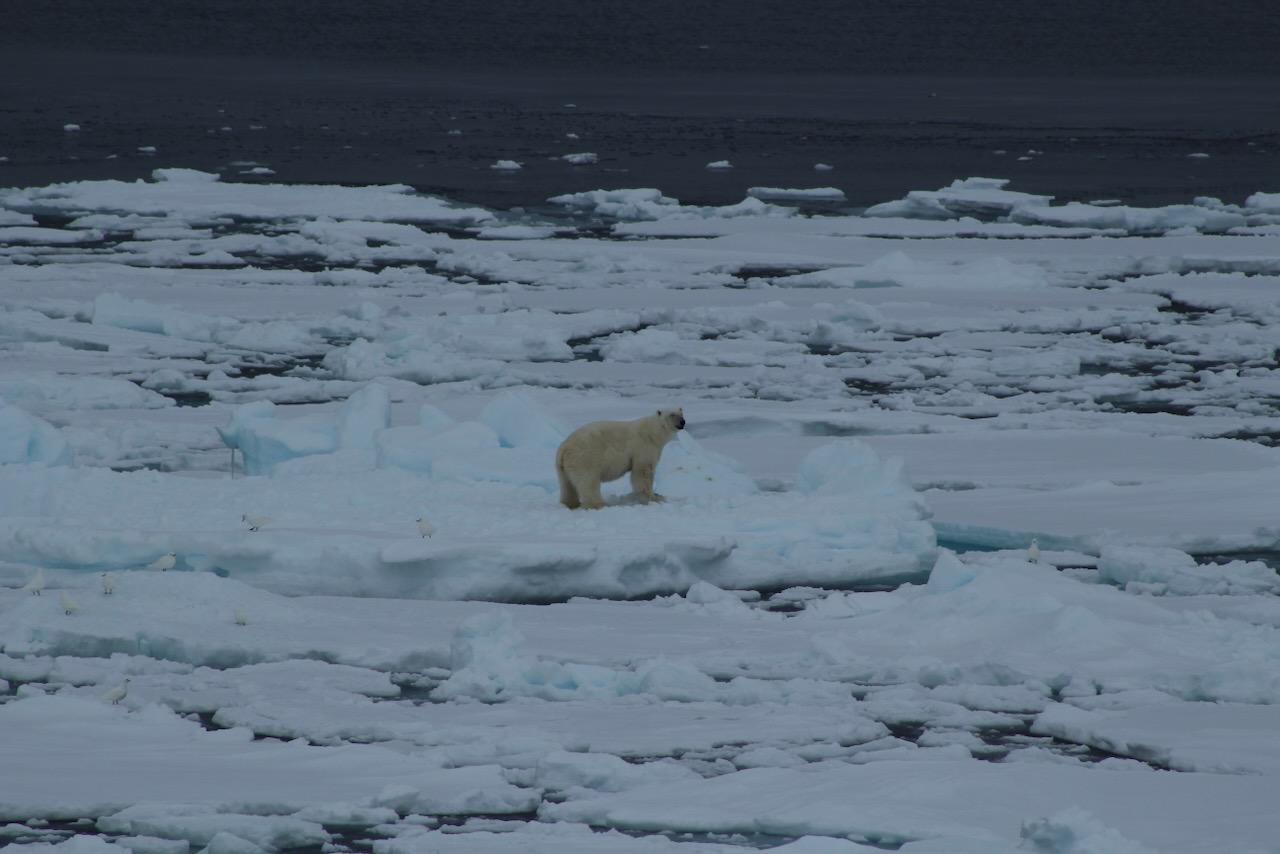
The expedition featured lectures from the expedition leaders, each with their own areas of specialist interest. During a lecture on ice, we heard that there will come a time when sea ice completely melts during the summer period. This may happen as late as 2050, but recent research shows it could even be as early as 2027. After this point, the ancient sea ice will disappear, and the landscape will never again be the same. Also, after this point, polar bears will not have the option to spend summer on the sea ice – they will need to retreat to land. If Svalbard were to remain as-is, with a relatively low population, this could be possible. But in other areas of the Arctic region, polar bears and humans are coming into increasingly closer contact – and this is dangerous for both species.
Melting Glaciers
For me, the greatest natural beauty was in the glacier fronts, as seen close-up from zodiacs in the fjords of Svalbard.
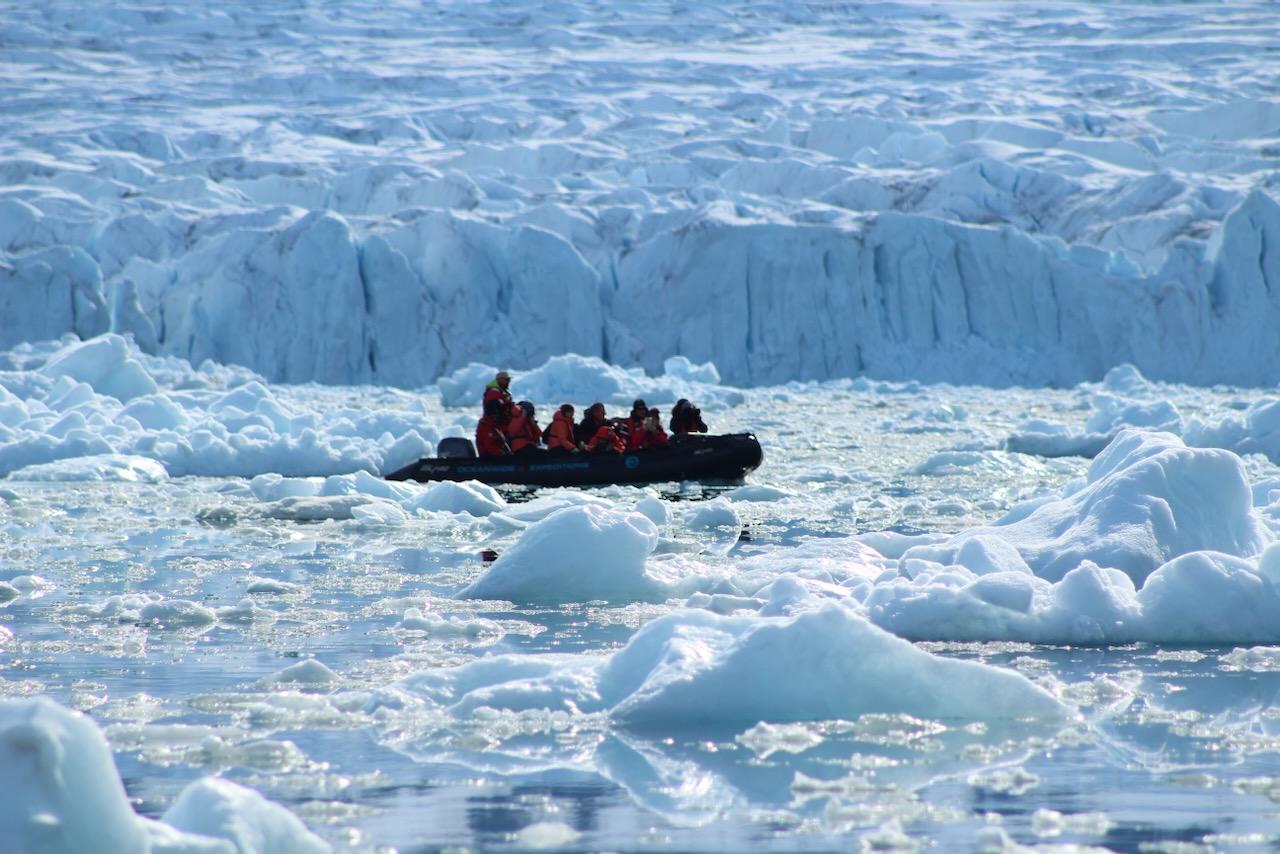
Ortelius was moored between two beautiful glacier fronts in a space where just a few years ago, the two glaciers had joined into a single flow. The glacier fronts have since retreated many hundreds of metres.
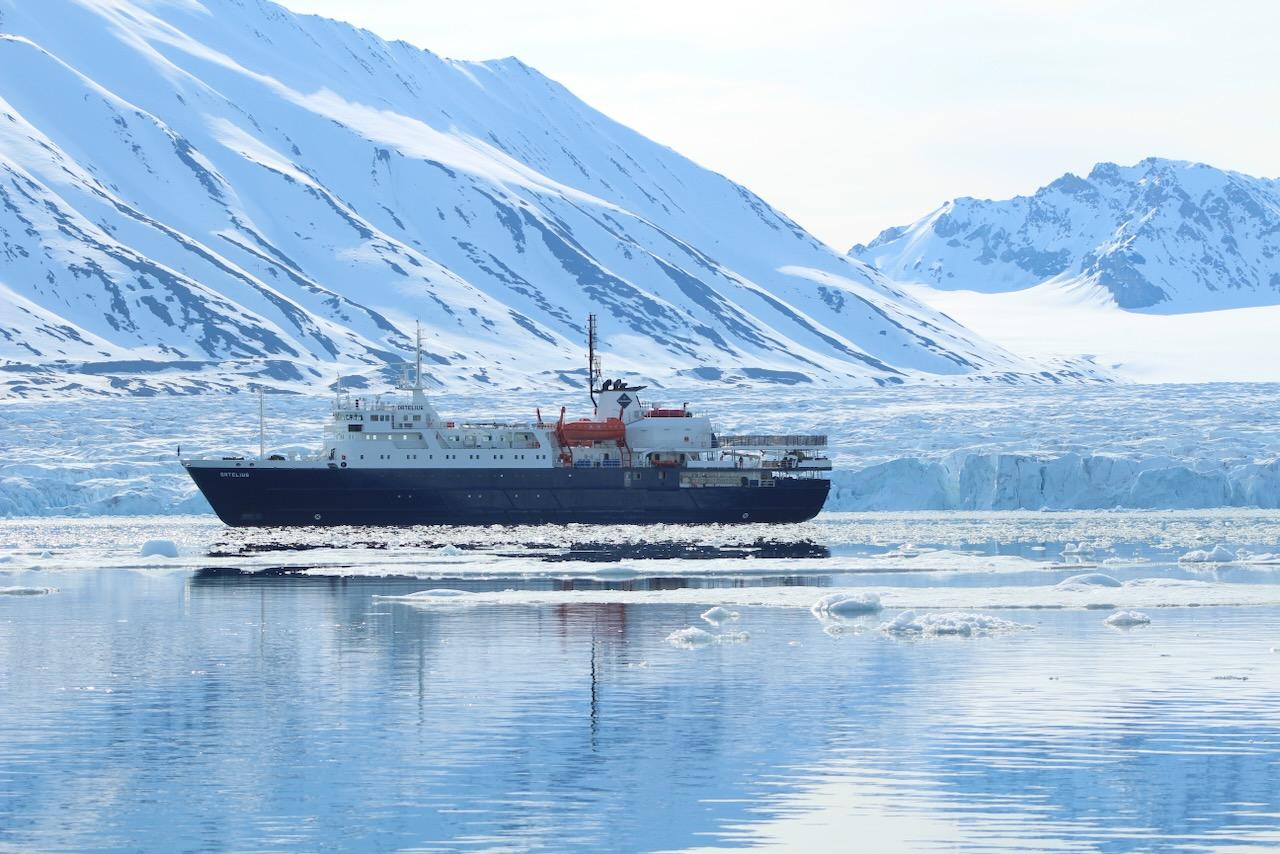
At many points during the expedition, we were reminded of how quickly the climate was changing. However, there seemed to be little guidance about what we (the expedition members) could do to make a positive contribution to help mitigate that change.
Engaging Further
I had a great conversation with the expedition leader about Climate Fresk, and how this can help non-scientists (like the expedition members) easily understand the definitive science of the IPCC reports, as well as how we can all make a positive contribution to mitigating and adapting to climate change. We agreed that it may be helpful to the expedition members to be briefed about Climate Fresk. Unfortunately, the opportunity did not arise within the busy expedition agenda.
I followed up after the expedition with the marketing team for the tour operator to explore how we might communicate to the expedition members the opportunity for them to attend a Climate Fresk workshop (in their own country and preferred language).
For me, this was an important gap in the expedition, as the participants were well motivated towards wanting to protect this wonderful environment we had visited. I was feeling a deep sadness about the changes in the region, and the Climate Fresk workshop process is designed to take such emotion through into motivation to make a positive change.
The latest situation is that the tour operator has declined to discuss this further, as they are internally finalising their strategy regarding climate change communication. I sincerely hope that their strategy will lead to an approach that will in future engage with expedition participants to seek their involvement in climate action.
Impacts of Climate Change in the Arctic
The Arctic is of interest to climate science for many reasons including:
(i) the rate of temperature change is the highest on the planet, so it's possible to observe some of the impacts of that change; and
(ii) the climate around the Arctic has a strong impact on the climate globally.
If the Greenland continental ice sheet continues to rapidly melt, the freshwater released will further dilute the salinity of the northern Atlantic. In turn, this could slow – or even stop – the Atlantic Meridional Overturning Circulation (AMOC), which could significantly and suddenly (in the space of a few years) lead to cooling of the northern Atlantic, and corresponding warming in the southern oceans. Counter-intuitively, this could lead to dramatic cooling (Arctic conditions) in northern Europe and further knock-on melting of Antarctic ice sheets. As the latter are on an even greater scale than in the Arctic, the consequential sea level rise could be measured in many metres – threatening coastal regions globally.
Thus, in Europe, as well as globally, we have a very strong interest in protecting the Arctic region from further change. Some change is already baked in, but every fraction of a degree of warming we can avoid will lead to less global risk to humanity and other nature.
Our Personal Impact
Travelling with my wife Christel, I estimate that our CO₂ emissions impact was for each of us around 1 tonne CO₂ equivalent for flights (Brussels to Svalbard via Oslo) and 4 TCO₂e for the cruise (based on data shared by the expedition team). Five TCO₂e emissions is clearly a massive carbon cost in relation to a target carbon footprint less than this value over a year.
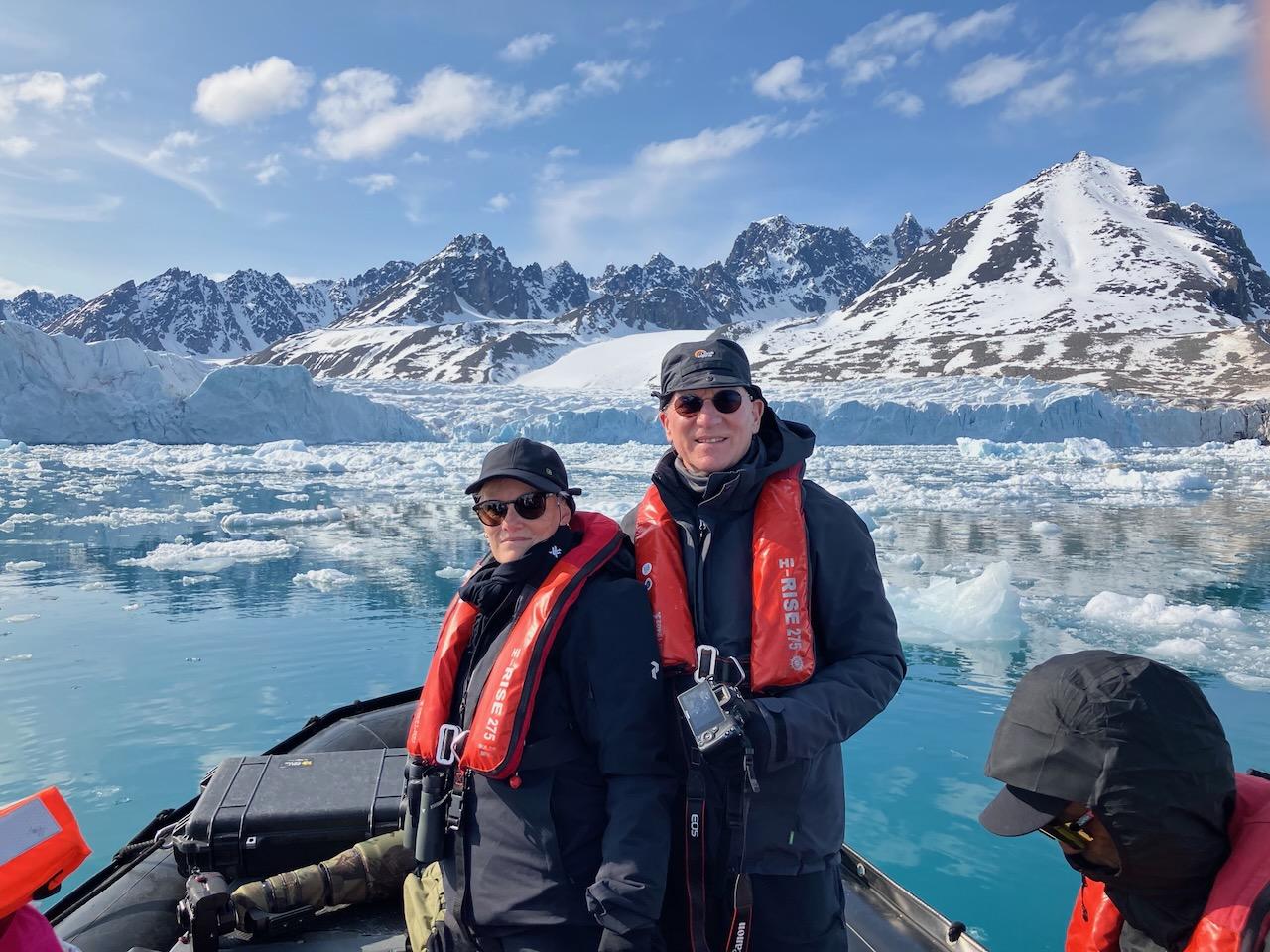
I took all available options to minimise this impact (e.g. participating in an offsetting scheme run by the expedition operator, as well as 100% purchase of biofuel options for our flights).
The latter cost a significant sum (€570 to be precise), so I have followed up with the airline to clarify how I can be sure this is leading to less burning of fossil fuel, as well as whether the biofuel is responsibly produced (e.g. if it required deforestation, it may have been even more harmful than burning fossil fuels?). I also raised the question: why should I need to subsidise this low-impact flying, when air travel is massively subsidised by governments (in the form of tax breaks)? Why aren't those subsidies being prioritised towards lowering the impact of flying?
At the time of writing this article, I have received no response from the airline (SAS), despite a reminder sent – I will persist!
(It’s a strange reflection on the norms in our society, that as I have spent money on something, that gives me the implied right to ask questions!)
Conclusion
So, what was the result of my genba?
Visiting the area around Svalbard was a beautiful experience – but it came at a cost (around 5 TCO₂e per person in our case). I propose to translate that cost into an investment by ensuring that, as a result of my visit, CO₂ emissions reductions exceeding 10 TCO₂e will be delivered. It's very difficult to measure, but communicating my genba via this article is one step in that process.
If you are thinking of visiting the Arctic region, I would thoroughly recommend it – but only if you are also intending to think of the cost to nature as an investment that you also commit to paying back as quickly as you can. (Don’t just go for the pretty pictures!)
As our plane took off from Longyearbyen, I shed a tear.
It can be sad when a nice holiday comes to an end, but this was something much deeper. I knew that I would never again be able to see this beautiful place in the same way. What we had seen will not even be possible for our son and daughter to see. That feeling made me want to be an ambassador for the Arctic – so that it can be protected as far as possible from further damage, primarily via climate change mitigation and the transition away from the burning of fossil fuels – globally.
See You at Maastricht!
I'm delighted that my presentation proposal has been accepted for the PMI BeNeLux Summit on 10 October 2025 in Maastricht. My presentation, entitled “Maximizing project success and delivering the Paris Agreement – supported by AI”, will further explore the idea of turning costs into investments.
It would be great to see you at Maastricht, to explore what we can do as project professionals to keep the targets of the 2015 Paris Agreement in our sights.
Stuart Thorp
Program Manager and Climate Activist, Stance Consulting
Stuart’s reflections remind us that project professionals have a role to play in shaping a sustainable future. Join him at the PMI BeNeLux Summit in Maastricht on 10 October for deeper insights into climate-aligned project delivery.